Understanding Cash Flow Challenges with High Census
Finance, Cash Flow, Healthcare Operations
Why Your Cash Flow Feels Tight Even When Census Is Up
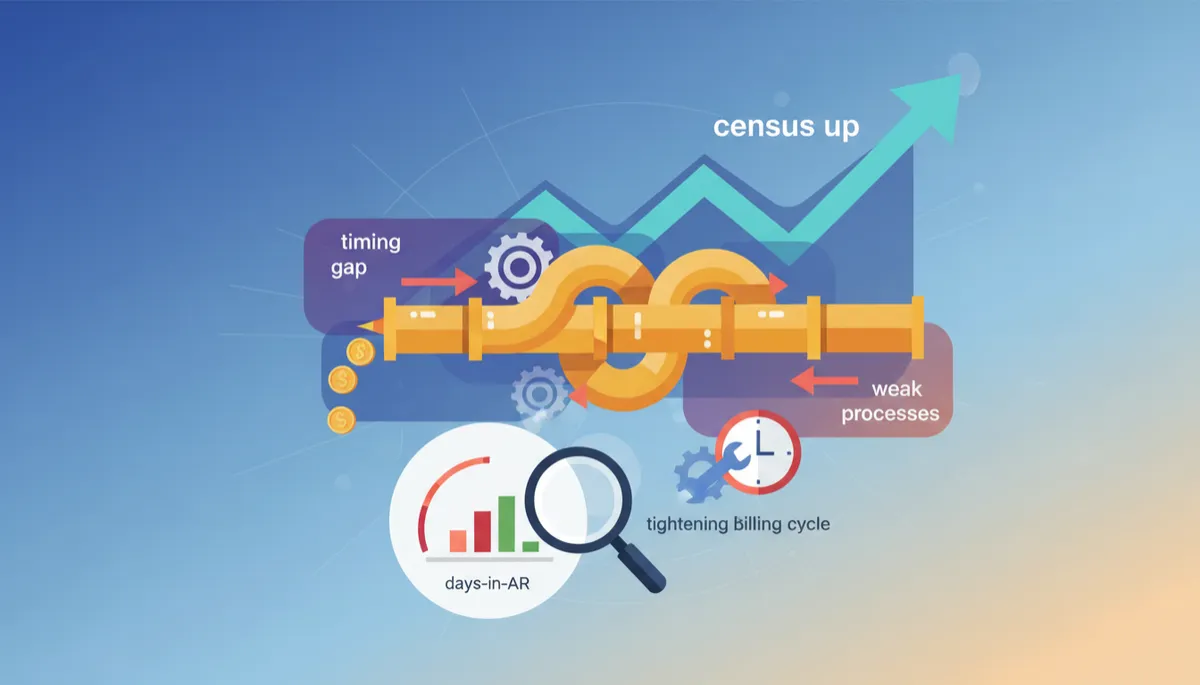
Higher census should mean more cash in the bank, yet many agencies and facilities feel more pressure, not less, when volumes rise. The reason usually is not growth itself, but how growth interacts with timing, processes, and your billing cycle.
When Volume Grows Faster Than Cash
Understanding the hidden timing gaps behind tight cash flow
Growth Adds Volume Before It Adds Cash
When census climbs, your organization feels it immediately in staffing, supplies, transportation, and overhead. Those costs hit this week. Revenue, however, does not. You provide more visits, days, or units of service today, but the cash from those services may not arrive for 30, 60, or even 90 days, depending on payer mix and billing practices.
That lag means growth first shows up as:
More payroll and overtime
Higher vendor and supply spend
Increased transportation and scheduling complexity
All of this happens before you see the matching increase in bank deposits. So even though the business is growing, cash can feel tighter than ever in the short term.
The Timing Gap That Hides in the Details
The real problem is usually a timing gap between when you earn revenue and when you collect it. That gap hides in everyday details that rarely make it into leadership discussions:
How long it takes clinicians to complete documentation after a visit
How quickly coding and QA review are completed
How many days pass before a claim is actually submitted
How fast denials are worked and resubmitted
Each small delay might seem harmless. Together, they can add weeks to your cash cycle. When census is low, the timing gap is easier to live with. When census rises, the same gap suddenly represents a much larger dollar amount trapped in accounts receivable instead of your operating account.
How Growth Exposes Weak Processes
Growth is a stress test. Processes that were “good enough” at 60 patients or 200 weekly visits may crack at 90 patients or 400 visits. The symptoms often look like:
Rising backlogs in coding, QA, or billing queues
More documentation errors that lead to delays or denials
Staff constantly firefighting instead of following a clean workflow
In other words, growth does not create weak processes; it reveals them. The good news is that tightening those processes can turn the same growth into stronger, more predictable cash flow.
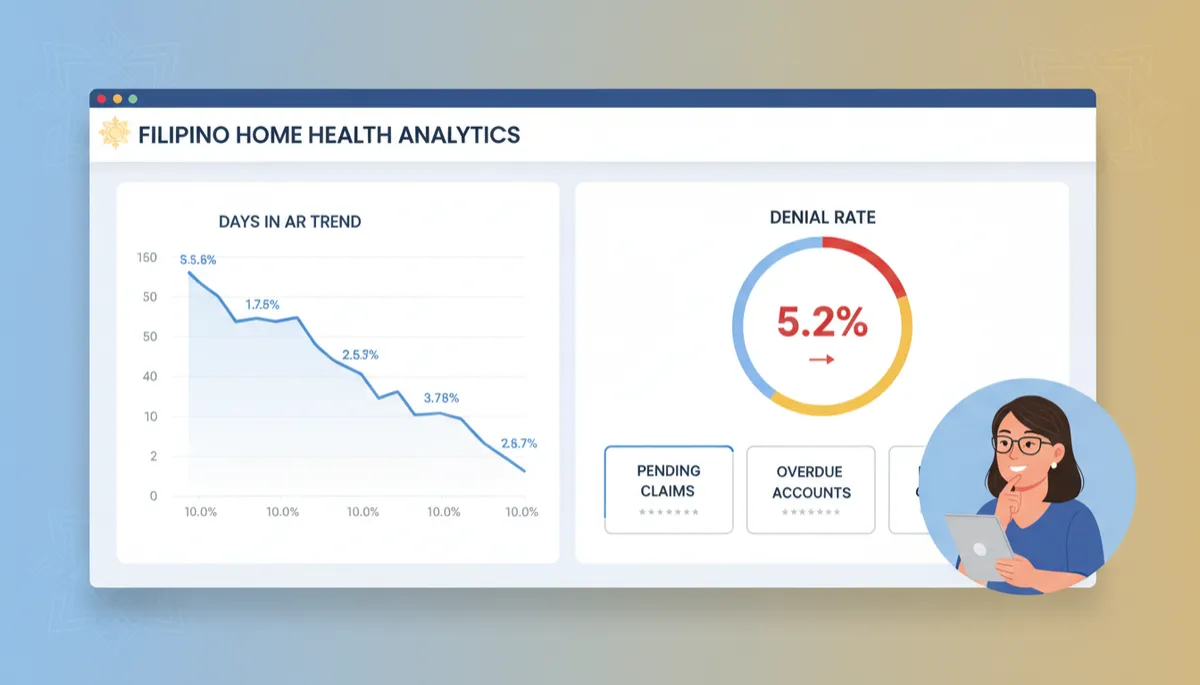
Tracking days in AR and denial rate turns vague cash worries into clear, actionable metrics.
What to Check Before You Push Census Higher
Before you approve new marketing initiatives, add referral partners, or expand service lines, pause and review a few key indicators. These metrics will tell you whether your revenue cycle can support more volume without choking cash:
1. Days-in-AR Trend
Days in Accounts Receivable (days-in-AR) measures how long it takes, on average, to collect what you are owed. Looking at the trend is more important than a single number. Ask:
Is days-in-AR creeping up month over month?
Are more dollars sitting in the 60+ or 90+ day buckets?
If days-in-AR is rising while census is rising, you are effectively lending more money to payers for longer. That is a warning sign to fix processes before you layer on additional growth.
2. Denial Rate and Root Causes
Your denial rate tells you what percentage of claims are rejected on first submission. A modest denial rate is normal; a climbing rate is costly. Denials do not just reduce revenue; they extend the cash cycle as staff rework and resubmit claims.
Track denial rate by payer and by reason code.
Look for patterns tied to documentation, eligibility, or coding errors.
If denial rate is increasing, more census will simply create more denied claims and more staff strain, further tightening cash.
Tighten the Billing Cycle, Not the Brakes on Growth
When leaders feel cash getting tight, the instinctive reaction is often to slow admissions, pull back on marketing, or cap census. That can relieve short-term pressure, but it also caps your long-term potential. In many cases, the smarter move is to tighten the billing cycle instead of slowing growth.
Practical ways to do that include:
Setting clear expectations for documentation completion within 24–48 hours
Automating eligibility checks and front-end verification to prevent avoidable denials
Shortening the time from service to claim submission with standardized workflows
Assigning dedicated ownership for denial follow-up and timely appeals
📌 Key Takeaway: Healthy growth and healthy cash flow are compatible—if your processes and billing cycle are built to handle the volume.
Turning Growth into Cash, Not Stress
If your census is up but cash feels tight, assume the business model is working—and that the issue sits in timing and process, not demand. Review your days-in-AR trend, denial rate, and every handoff in the billing cycle. Then invest in tightening those steps so each new admission moves to cash as quickly and reliably as possible.
When you do, growth stops feeling like a cash drain and starts behaving the way it should: as the engine that funds better care, stronger teams, and a more resilient organization.


